




경희대학교 후마니타스칼리지와 실천교육센터는 유네스코 마하트마 간디 지속가능발전 및 평화교육연구소(UNESCO MGIEP)와 공동으로 글로벌 청년 리더 양성 프로그램(UNESCO MGIEP Youth Fellowship: Leadership for Peace and Sustainability)을 7월 2일부터 11일까지 운영했다. 인도의 30세 미만 청년 15명이 세계시민으로서의 역량을 강화하고 복합위기에 처한 현대사회에 대응하기 위해 이번 연수에 참가했다.
세계시민교육, 평화, 지속가능한 발전, 디지털 민주주의, 빈곤과 주거, 이주와 다문화 등의 주제를 중심으로 기조 강연, 워크숍, 현장 탐방 등 다양한 프로그램에 참여한 결과와 한국사회를 바라보는 인도 청년의 기록 5편을 <프레시안>에 기고한다.
'경희대 후마니타스칼리지-UNESCO MGIEP 청년 펠로우십 프로그램(2026)'에 지원하면서, 나는 평화, 세계시민성, 지속가능한 발전에 대한 이해를 심화하고 싶었다. 요가를 연구하는 통합의학 박사 과정생으로서, 나는 이러한 개념들이 어떻게 더 건강하고 회복력 있는 공동체를 만드는 데 기여할 수 있을지 탐구하고자 했다. 내가 펠로우십에서 통찰한 것은 내 기대를 휠씬 뛰어넘는 것이었다. 펠로우십은 한국의 경희대학교 후마니타스칼리지가 주관했고, 다양한 지역, 문화, 전문적 배경을 지닌 15명의 인도의 청년 리더들이 한자리에 모였다. 대화, 그룹 활동, 현장 방문을 통해 우리는 서로의 경험에서 배우며 평화, 지속가능성, 세계시민성에 대한 새로운 시각을 얻을 수 있었다. 이 펠로우십은 단순한 학술 프로그램을 넘어, 평화를 추상적인 이상이 아니라 공감, 대화, 공동 행동을 통해 만들어 가는 삶의 경험으로 이해하게 한 뜻깊은 계기였다. 참가자들의 다양성 자체가 펠로우십을 통해 얻은 가장 큰 가르침 중 하나였으며, 서로의 상황은 달랐지만, 정의, 존엄성, 지속가능성, 평화를 향한 열망은 놀라울 만큼 서로 닮아 있다는 사실을 깨달았다.
펠로우십은 간디의 리더십, 세계시민교육, 시스템 사고, 갈등 전환에 대한 세션으로 시작되었다. 이러한 세션을 통해 평화는 단순히 폭력이 없는 상태가 아니라, 정의, 공감, 포용, 공동 책임이 실현되는 상태라는 점을 이해하게 되었다. 팀별 활동과 문화 간 대화는 단순하지만 강력한 진실을 다시금 일깨워주었다. 즉, 의미 있는 평화 구축을 위해 적극적인 경청, 상호 존중, 다양한 관점에 참여하려는 의지와 열린 태도가 필요하다는 것이다. 우리는 대화가 단순히 의사소통의 위한 도구가 아니라 신뢰와 사회적 결속의 토대라는 사실을 배웠다.
한국 비무장지대(DMZ) 방문만큼 마음이 무거워지는 순간은 드물었다. 세계에서 가장 삼엄하게 경비가 이루어지는 국경 중 하나에 서서, 평화는 결코 군사적 경계만으로 보장되지 않는다는 사실을 되새겼다. 오히려 평화는 이해, 협력, 화해를 추구하는 용기를 통해 유지될 수 있다. 이번 방문은 분단이 가져오는 인적 피해를 여실히 보여주었고, 대화와 외교가 왜 필수적인지를 다시금 깨닫게 해주었다.
성동구 스마트시티 방문을 통해 스마트 공공 서비스와 안전 시스템이 도시 생활을 어떻게 개선할 수 있는지 직접 확인할 수 있었다. 이와 동시에 혁신과 사생활 보호 사이의 균형이라는 중요한 과제도 생각해 보게 되었는데, 기술은 언제나 인간적 가치와 민주적 책임에 따라 활용되어야 한다는 점을 이해하게 되었다. 빠띠(Parti)에서는 서로의 의견 차이를 존중하는 마음으로 표현하고 적극적인 경청을 촉진하는 구조화된 대화를 통해 디지털 민주주의를 경험할 수 있었다. 이를 통해 평화 구축은 차이를 없애는 것이 아니라, 다양한 관점이 상호 이해와 공동의 해결책으로 이어질 수 있는 공간을 만드는 것임을 다시금 깨닫게 되었다.
안산 방문으로 포용성, 문화 다양성, 지역사회의 지원이 어떻게 소속감을 키워주는지 조명해 보았다. 안산 외국인주민지원본부, 다문화가족지원센터, 고려인문화센터에서는 교육, 통합, 나눔의 정신이 어떻게 다문화 공동체를 강화하는지 직접 확인할 수 있었다.
이번 펠로우십 기간 동안 가장 감동적인 순간 중 하나는 세월호 참사 희생자들을 기리기 위해 보존된 단원고 4·16 기억교실을 방문한 일이었다. 이 추모 공간은 슬픔에 머무르지 않고 성찰과 책임감을 일깨웠으며, 미래 세대를 향한 연민과 배려를 키움으로써 추모 자체가 평화 구축의 한 형태가 될 수 있음을 보여주었다.
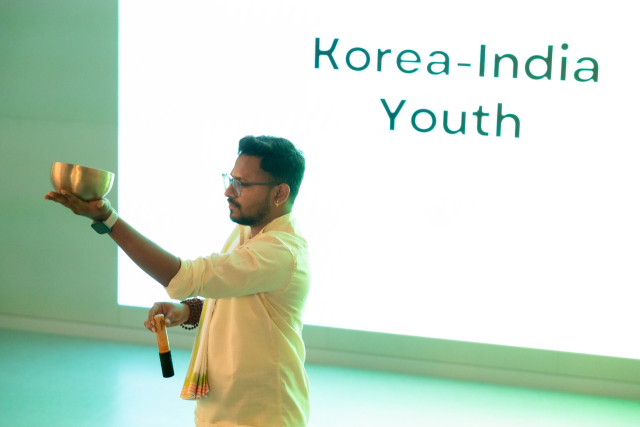
펠로우십 기간 내내 나는 요가 철학을 단순히 신체적인 수련이 아닌, 평화로운 삶을 위한 총체적인 틀로서 이해하는 철학과 연결지어 생각했다. "바수다이바 쿠툼바캄(Vasudhaiva Kutumbakam)" 즉 세상은 한 가족이라는 생각은 국경과 정체성을 초월하여 세상을 바라보자는 이번 펠로우십의 취지와 일맥상통했다. 아힘사(비폭력)와 사티아(진실)는 우리가 매일 실천했던 정직하고 자비로운 대화를 반영했고, 아스테야와 아파리그라하(비도둑질과 무소유)는 윤리적이고 지속 가능한 삶을 이야기했다. 카루나(자비)와 세바(헌신적인 봉사)는 공감을 행동으로 옮겨 주었다. 포용성, 회복력, 지속가능한 발전이라는 펠로우십의 비전과 밀접하게 맞닿아 있는 이 원칙들은 정신 건강과 자기 인식이 평화로운 공동체의 토대라는 사실을 다시금 일깨워주었다.
나는 글로벌 펠로우십의 추억을 넘어, 더욱 깊어진 사명감을 안고 귀국했다. 이 경험은 통합의학 연구자로서 나의 소명 의식을 새롭게 일깨워 주었고, 평화 교육, 마음 챙김, 근거 기반 건강 관리를 지역사회 활동에 접목해 회복력을 강화하고 청년들 간의 대화를 촉진하고자 하는데 영감을 주었다. 앞으로는 지속가능한 발전목표 달성을 위해 연민, 과학적 탐구, 협력적 실천을 바탕으로 지역사회가 현재 겪고 있는 어려움을 해결할 수 있도록 돕는 프로그램을 구축하고자 한다.
'경희대 후마니타스칼리지 - 유네스코(UNESCO) MGIEP 청년 펠로우십 프로그램(2026)'은 공식적으로 마무리되었지만, 그 가르침은 계속해서 나의 여정에 깊이 영향을 미치고 있다. 지속적인 평화는 정부의 노력만으로 이루어지거나 기술만으로 유지되는 것이 아니다. 평화는 매일 편견보다 공감을, 분열보다 대화를, 갈등보다 협력을 선택하는 개인들의 실천을 통해만 만들어진다. 사회적, 환경적, 정치적 도전이 점점 심화되는 오늘날, 세계시민성은 서로 경청하고 배우고 함께 협력하려는 단순한 의지에서 시작된다는 확신을 갖게 되었다. 궁극적으로 평화는 단순한 열망이 아니다. 평화는 실천이자, 책임이며, 인류가 함께 지켜 나가야 할 약속이다.
※ 니킬 스리니바스(Nikhil Srinivas)는 통합의학 박사과정 학생으로, 요가, 청소년 역량 강화, 정신 건강, 지속 가능한 웰빙 및 연구에 집중하고 있다.
Beyond Classrooms and Borders: A Transformative Journey of Peace and Global Citizenship
When I applied for the UNESCO MGIEP Youth Fellowship on Leadership for Peace and Sustainability, I hoped to deepen my understanding of peace, global citizenship, and sustainable development. As a PhD scholar in Integrative Medicine researching yoga, I was eager to explore how these ideas could contribute to building healthier and more resilient communities. What I discovered was far more than I expected. The Fellowship was hosted by the College of Humanities at Kyung Hee University, Republic of Korea. It brought together 15 Indian youth leaders from different regions, cultures, and professional backgrounds. Through conversations, group activities, and field visits, we had the opportunity to learn from each other's experiences and gain new perspectives on peace, sustainability, and global citizenship. More than an academic programme, it transformed my understanding of peace not as an abstract ideal, but as a lived experience built through empathy, dialogue, and collective action. The diversity of participants itself became one of the Fellowship's greatest teachers, reminding me that while our contexts differ, our aspirations for justice, dignity, sustainability, and peace are remarkably similar.
The Fellowship opened with sessions on Gandhian leadership, Global Citizenship Education, systems thinking, and conflict transformation. These challenged us to see peace not merely as the absence of violence, but as the presence of justice, empathy, inclusion, and shared responsibility. Team-building exercises and intercultural dialogue reinforced a simple but powerful truth: meaningful peacebuilding requires active listening, mutual respect, and the willingness to engage with differing perspectives. Dialogue, we learned, is not just a communication tool but rather the foundation of trust and social cohesion.
Few moments were as sobering as our visit to the Korean Demilitarized Zone (DMZ). Standing at one of the world's most heavily fortified borders, I reflected on how peace is never guaranteed by military boundaries alone. Rather, it is sustained through understanding, cooperation, and the courage to pursue reconciliation. The visit was a stark reminder of the human cost of division, and of why dialogue and diplomacy remain indispensable.
Our visit to the Seongdong-gu Smart City demonstrated how technology can improve urban life through smart public services and safety systems. At the same time, it raised important questions about balancing innovation with privacy, reminding us that technology must always be guided by human values and democratic accountability. At Parti, we experienced digital democracy through structured dialogue that encouraged respectful disagreement and active listening. The experience reinforced that peacebuilding is not about eliminating differences, but about creating spaces where diverse perspectives can lead to mutual understanding and collective solutions.
Our visit to Ansan highlighted how inclusion, cultural diversity, and community support foster a sense of belonging. Through the Foreign Resident Support Headquarters, the Ansan Multicultural Family Support Centre, and the Goryeoin Support Centre, we saw how education, integration, and the spirit of giving back strengthen multicultural communities.
One of my most emotional moments during this Fellowship was our visit to the 4.16 Danwon High School Memorial Classroom, preserved in memory of the lives lost in the Sewol Ferry tragedy. Rather than dwelling in grief alone, the memorial inspires reflection and responsibility, showing that remembrance itself can be an act of peacebuilding when it strengthens compassion and care for future generations.
Throughout the Fellowship, I found myself drawing connections to the philosophy of yoga not as a physical practice alone, but as a holistic framework for peaceful living. "Vasudhaiva Kutumbakam," the idea that the world is one family, echoed the Fellowship's emphasis on looking beyond borders and identities. Ahimsa (non-violence) and Satya (truthfulness) mirrored the honest, compassionate dialogue we practised daily, while Asteya and Aparigraha, non-stealing and non-possessiveness, spoke to ethical, sustainable living. Karuna (compassion) and Seva (selfless service) transformed empathy into action. Aligning closely with the Fellowship's vision of inclusion, resilience, and sustainable development, these principles reinforced how mental well-being and self-awareness underpin peaceful communities.
I have returned home with far more than memories of an international Fellowship. This experience has renewed my sense of purpose as a researcher in integrative medicine, inspiring me to weave peace education, mindfulness, and evidence-based health practices into community initiatives that strengthen resilience and encourage dialogue among young people. I hope to build programmes that help communities address current challenges through compassion, scientific inquiry, and collaborative action in service of the Sustainable Development Goals.
While the UNESCO MGIEP Youth Fellowship has formally concluded, its lessons continue to shape my journey. Lasting peace is not created by governments alone, nor sustained by just technology. Rather, it is built daily by individuals who choose empathy over prejudice, dialogue over division, and cooperation over conflict. In a world facing mounting social, environmental, and political challenges, I leave convinced that global citizenship begins with a simple willingness to listen, learn, and work together. Peace, ultimately, is not merely an aspiration. It is a practice, a responsibility, and a shared commitment to humanity.
※ Nikhil Srinivas is a PhD scholar in Integrative Medicine, focusing on yoga, youth empowerment, mental health, sustainable wellness, and research.




전체댓글 0